[Fiction] Join My Startup Or Cease To Exist: Chapter 1
I.
"Okay," the man said, pulling up a chair with the energy of someone who had been looking forward to this. "What I'm about to tell you is going to sound straight bonkers, and I need you to stay with me."
Lucille, who had just died, straightened in her chair. Alright, here it goes.
"I'm dead?" she offered.
"That's - yes! That part I'll get to. This is more urgent, far more urgent."
Lucille sat forward.
"Marilyn Monroe and Queen Elizabeth II," the man said, "were born in the same year."
Lucille looked at him. Then she looked around the room, in case there was someone else this information was intended for. The man studied her face for signs of shock and found it unhelpfully composed.
"Most people," he said, with a slight emphasis that suggested she was not behaving like most people, "would be shocked to hear this!"
He slid a page across the desk.
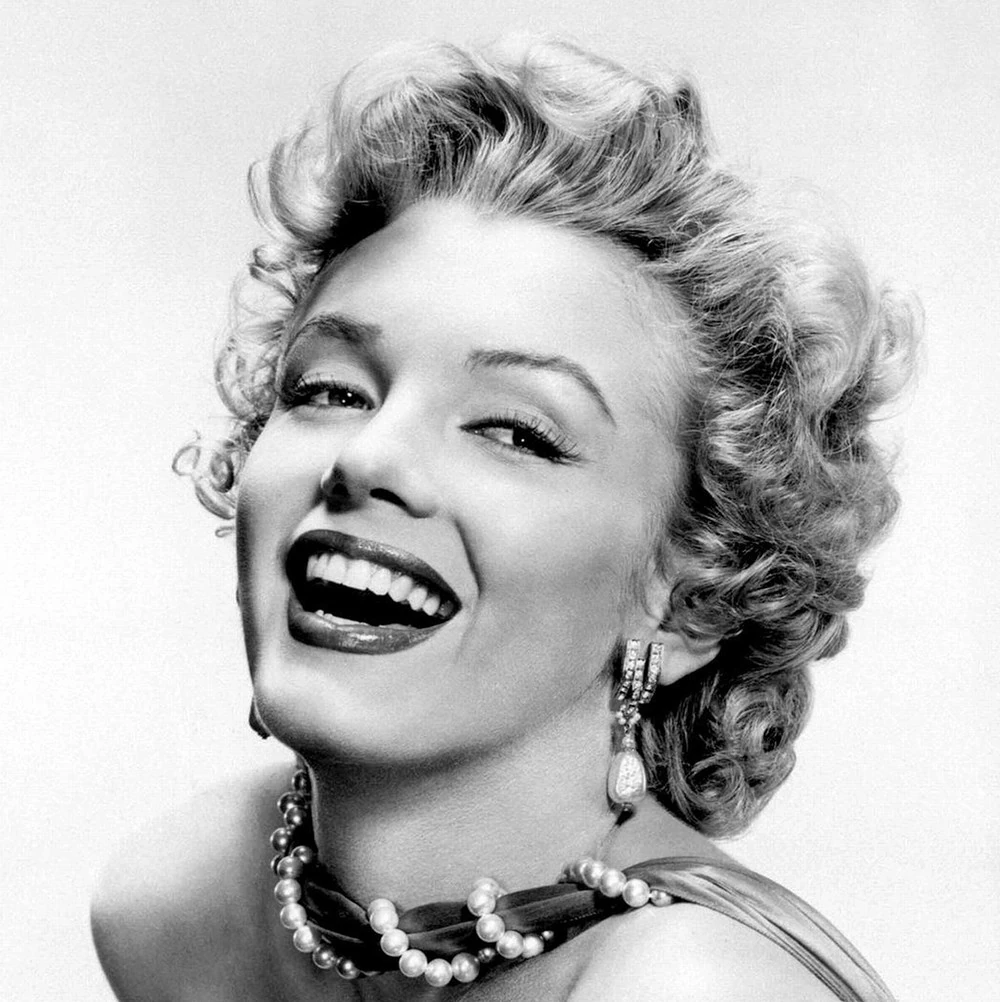
"Monroe's fame captured her young. She died at thirty-six, but in the collective memory she is forever twenty-something."
He slid another across.

"Meanwhile the Queen aged through seven decades on the throne. Her most iconic image is of that elderly woman in her nineties."
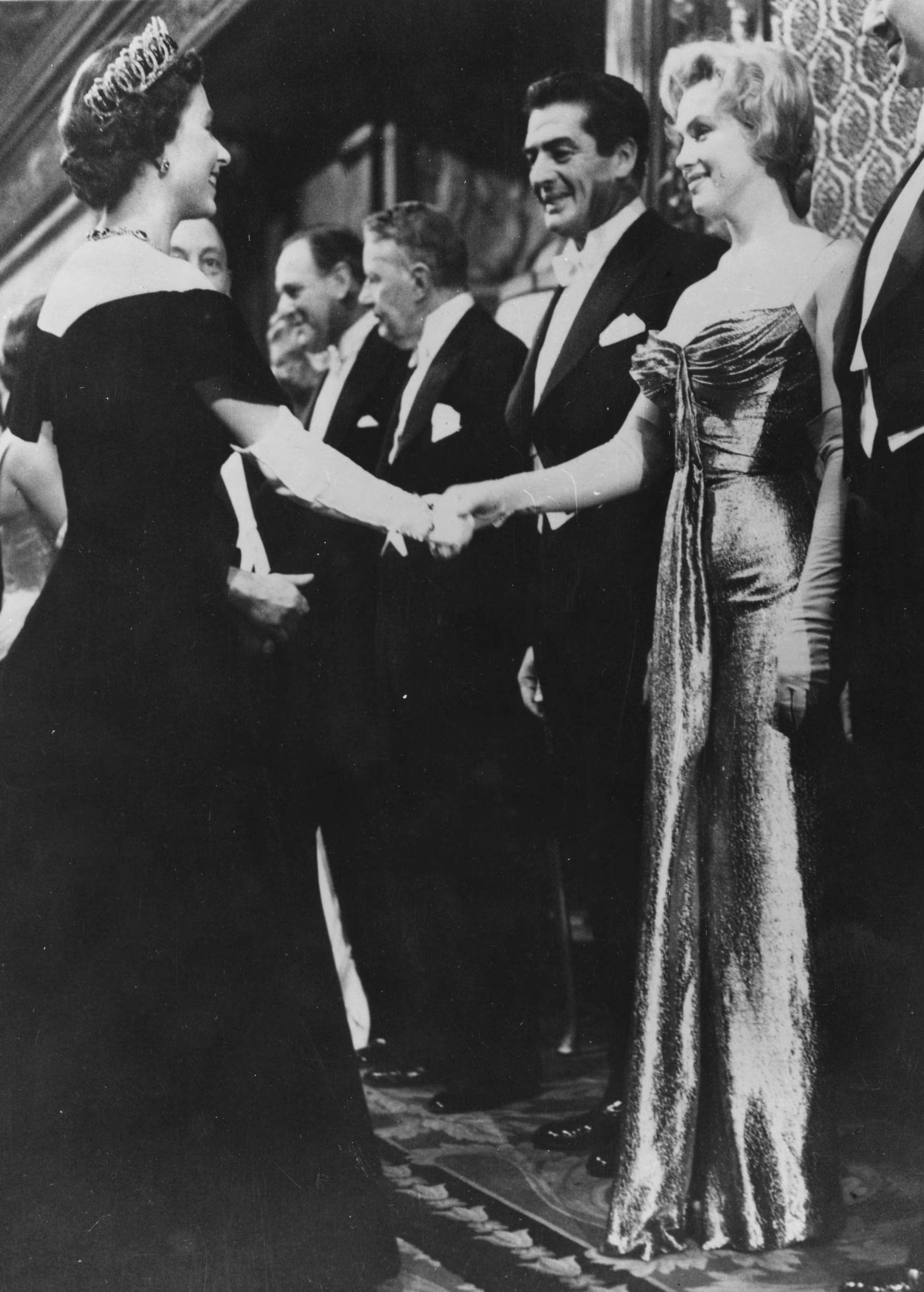
"Which is why most people are shocked - shocked! - to learn they were the same age when they met in 1956 - we remember their faces at wildly different ages."
He swept the pages aside and leaned forward. "Which raises an interesting question for someone in my line of work..."
"When a soul arrives in the afterlife," - he gestured at her - "which version of themselves do we give them? The face they died with? The face the world remembers? Or the face they wore when they were happiest?"
The woman across the desk, Lucille, considered this with unhurried attention.
Lucille smiled. "The face the world remembers," she said, "assumes the world is thinking of me at all."
The man made a small note, lightly crossing out the first option. "And the face you wore when you were happiest?"
She thought about this for a long time, it was genuinely hard to choose. She had been happy and sad for various reasons. She thought about her years as a TV anchor, that she smiled the most but also had been told how to do it. Then she thought about her years as a teacher, in the classroom of students she had loved as her own, and who had, in the way of most students, mostly moved on. Then she thought of her final years in the small shop she kept, the particular satisfaction of a finished hem, and the brides who sometimes hugged her after, which she permitted.
"I'm not sure I have a definitive answer," she said. "But I'm in reasonable shape, for seventy-two. I'll keep this face here, the one I have now."
"Practical," said the man.
He shuffled his papers.
"You have the honor," he said, "of being employee number one. Entirely your choice, of course."
He paused. "I should mention, and this is standard disclosure... are you Christian? Hindu? Buddhist?"
Lucille looked at him. "No."
"Spiritual but not religious?"
"Not particularly."
"Do you believe in anything, broadly speaking, that would give you somewhere to go after this?"
She considered this. "No."
"Right!" He straightened his papers, beaming. "Then it's join my startup or cease to exist."
Lucille picked up the contract and began to read.
II. Several weeks later
The second one was harder to find.
Sabrina had been sitting across from this man for ten minutes now, this strange man who claimed to challenge Death.
"The afterlife market," he said, "is shrinking! Every year, more people die having sincerely believed in nothing. They spend their whole lives insisting that when they die, they cease to exist."
"This is where I come in!" he said. "When a person dies and they still exist, and not only do they still exist, but they're sitting across from me staring at a pitch deck that I printed out and laminated, they're utterly bewildered."
At this point, he smiled a really toothy smile.
"Basically, I run a bootstrapped afterlife! I collect the unclaimed souls, the people who died without believing in much of anything, who don't have a Heaven or a Nirvana or the cycle of samsara to come home to. I collect them and I give them a home."
"And I'm facing a rather dire issue. I'm a seed-stage startup running on a fairly modest amount of VC money, and my retention metrics are - frankly! - embarrassing. All this hard work I put into harvesting these unclaimed souls, I can barely hold onto them!"
"So, I did look into the reason why my souls are vanishing left and right. And it turns out - this is the beautiful part, this is where you come in - there's a little upkeep cost to sustaining the souls in my afterlife. Every soul stays alive as long as someone living still holds a memory to them. Without them, the soul simply ceases to exist."
He pointed at her.
"Think about what you do!" he proclaimed. "You manage attachment, the belief that another person is essential to your existence. You are, as far as I can tell, the only person alive who can make one person, with complete sincerity, believe another was the most important person in the world."
"You are, essentially, my retention strategy! Every living person you keep attached to a memory of the dead is another soul I don't lose."
The man set down his coffee. "You, the High Priestess of Attachment, and I who is building around Death, we will build a business of a millennium!"
III.
Sabrina, who could hardly call herself the High Priestess of Attachment, looked at his pitch deck and contract, then looked up at this strange man who claimed to challenge Death.
In some sense, the man's "High Priestess of Attachment" had some basis, even if he had dressed it up a little. But Sabrina had not yet reached the level she had originally set out for, and had not yet built the thing she actually meant to build.
She had been not-yet-building this thing for a very, very long time.
When Sabrina was eleven, she designed a worm. There were several things Sabrina got wrong about this worm.
The number one thing you should know about this worm is that she intended it to spread agape love, the sort of love that Michael Jackson sings about in Heal the World where round-faced, bright-eyed children from each continent, variously blessed in melanin, hold hands as they form a ring around the globe.
But Sabrina, not yet understanding the difference between types of love at a mechanistic level, had activated the neurochemical pathways governing eros, of romantic fixation rather than warm goodwill. Eros love was less of Sabrina's Michael Jackson-esque In my heart I feel / you are all my brothers, and more of Whitney Houston’s And I-eee-EEE-eee-I will always love you.
This eros worm was, albeit not as agape as Sabrina had hoped, a masterpiece.
To be fair to Sabrina, the neurochemistry itself was remarkable. She was eleven, and she had figured out how to make one human brain reliably, reproducibly (for some period of time, at least) love another. Person A would look at Person B and feel, with complete neurochemical sincerity, that Person B was the most important person in the world.
Everyone loving the first person they see in this "most important person in the world" sounds utopian until you realise that two people infected at the same time... don't necessarily see each other first. And when it comes to eros, this neurochemical belief of "the most important person in the world" is a rather different thing from the MJ kind.
So you have Person A pining for Person B, Person B pining for Person C, Person C pining for option (D) none of the above, and just like that, you have a scene straight from A Midsummer Night's Dream, where, after Puck’s meddling with the flower spell, you have everyone bumbling like geese, each devoted to precisely the wrong person.
Sabrina was called to the principal's office, which was less dramatic than it sounded because Mrs. Okafor was herself mildly infected and spent the meeting gazing warmly at the school's head of maintenance, Mr. Adeyemi, who had come to fix the projector.
The worm was resolved the way most of Sabrina's childhood experiments were resolved: imperfectly, over time, with some residual awkwardness.
IV.
When Sabrina was twenty-three, she found a little flat in San Francisco, in an odd corner of Chinatown near the place where pharmacists sold their funny TCM herbs, and hung a small brass plaque by the door that said nothing more than "S. Osei - Consultant."
She would see anyone with a heart problem, provided it was neurological. Most of them had eros problems, the lovesick, the heartbroken, the marriages quietly dying, and she did what she could with what they brought her, and she fixed them, or at least tried to.
Word spread the way it does in cities, quietly, through shame and desperation.
In spite of this, Sabrina was not, herself, especially interested in eros. This fact surprised people, yet it shouldn't have.
"When you get off work," she had told her dentist, "do you spend the evening thinking about teeth?" He had laughed and said no. "Same," she said.
By the time she answered clients in her small practice, she could produce eros with the reliability of a vending machine, and, if vending machines had feelings, roughly the same enthusiasm as well.
Over her years of practice, Sabrina had quietly sorted her clients into three camps.
The first were the clients that no longer needed her by the time they arrived. These were people who had scheduled a consultation, then scheduled the procedure, and then, the day before, cancelled. They would say something like, we talked. I think we're okay now. I'm sorry to waste your time. Sabrina was never sorry, she was relieved.
The second were the typical clients: they scheduled, they came, they left with their neurochemistry gently rearranged, and she didn't see them again.
And the third... well, they were the ones who came back, a lot. They came back broken, and she fixed them, and they came back broken again.
With these clients, she slowly realized an uncomfortable truth, that she wasn't a healer so much as a very skilled tuner of instruments that were missing strings. She could deliver what her client asked for, but never without terrible relapses.
More and more, she grew frustrated with her inability to create what wasn't there, with her inability to add the strings themselves. If somebody's brain lacked the capacity for empathy, or if they filled themselves with self-loathing and a fundamental lack of self worth, she had less to work with.
This led Sabrina urgently toward the problem of cognition. If she could "solve" cognition, the third camp of clients might finally stop coming back broken.
Cognition, it turned out, was even less legible than agape. She could deactivate neural pathways in bulk, and she had done this, carefully, in research contexts, but bulk deactivation was a horribly blunt instrument.
There was a boy she had worked with, briefly, whose particular darkness she had been, at the time, quite sure she could fix. She could see exactly which lights were hurting him, but his lights were connected in ways she didn't quite understand, and when she smashed the bad ones, the good ones went out too. She had done the smashing procedure cleanly, efficiently, exactly as planned, and watched those lights go out, the bad ones with the good ones, and had not tried it again.
By every metric the experiment was a success, the numbers were good, and the boy was peaceful. She wrote, experiment successful in her notebook. But she looked at him sitting there in his chair, and did not write down the other conclusion she had reached, which was that she would never do this to her own brother, and she did not try it again.
So. Why bother? Why the eros practice, why these forays in cognition, why any of it?
What Sabrina wanted, what she had always wanted, since that day in the principal's office, was what she had originally set out to make, which was a reliable mechanism for agape. The children in that Michael Jackson video were still holding hands in her head, and she had yet to be convinced it was merely a song.
Partly, she could admit, this was out of ego; the original eros-when-i-intended-agape worm had been a spectacular misfire, and she wasn’t the kind of person who liked to leave a problem unsolved, least of all one she had created herself.
But there was a softer reason underneath this pride; she had spent enough time in her practice watching people suffer from eros, to believe, more than ever, that what those people actually wanted and actually needed was this other thing, of agape. Agape, the sense that other people were glad you existed.
At the same time, she knew that this was a problem that would take years of inquiry to get right, and she had bills to pay. In the meantime, it turned out a great many people had eros problems, and they would pay her hefty amounts to solve it.
So in the meantime Sabrina kept her small hours in the flat in Chinatown, doing the work she could do with care if not with wonder. She listened well. She was never dismissive of what people brought her, and she fixed what she could fix, and charged what the work was worth. Eros was no agape, but the people were real, and so it was real work.
V.
"Very well," Sabrina said. "I'll do it, I'll be your retention strategy, I'll keep your souls from from vanishing. But with one caveat: I can't let my practice go unattended."
"I thought you were tired of eros," said the man. "Even you told me you had enough of hearing the Nth foolish young twenty-something-year-old asking you to fix their carelessness, or the Nth businessman in a dying marriage asking you to make his wife love him again."
He leaned forward. "And don't get me started on the grieving widowers, the way it unsettles you when they ask you to remove a grief that still has years of love left in it. This job is emotionally corrosive, why hand that weight to someone else? Wouldn't it be a mercy, really, to simply let the practice close?"
"Even so," said Sabrina, "Eros problems don't stop being real problems because I find them uninteresting. Even the foolish twenty-somethings deserve somebody who takes them seriously."
The man raised his eyebrow at this. "Really!" he said.
"I would like my good friend Lucille to take over my eros practice."
The man smiled. "Oh? But haven't you heard? Lucille's already dead."
At Sabrina's shocked face, he added, "But she's still with us. Employee number one!"
VI.
Lucille was seventy-two years old, and what bonded her and Sabrina was that they were both in the business of love, yet were perhaps the two people least interested in it, in the eros sense.
Lucille made wedding dresses. She had made perhaps three hundred of them, and she had never worn one herself.
This was not, as far as Sabrina could tell, a fact that tormented Lucille, if she even made it out to be a tragedy. It was simply a fact about her.
There were rumors, of course.
Sabrina had been one of her literature students, years ago. Perhaps because students were less inhibited than adults in this respect, the rumors from her classmates and those of said age were the most scandalous: that she had been left at the altar, or that there had been a man in Guangzhou who had died in some suspiciously convenient way (poisoning, a fall down the stairs, or an allergic reaction to something he'd eaten at her table, nobody could agree how, but it'd mirror at least one book they read in class) and she had left the country within the month, or, most dramatically, that she had been married and divorced not once but twice and sworn off the institution entirely.
What was actually known about Lucille was considerably less dramatic.
She had started her adult life as a news anchor in Guangzhou, very composed, the kind of young woman the camera liked, and then had moved overseas and become a Chinese language and literature teacher, and then had retired from teaching, and then had picked up a needle because retired life felt purposeless and she discovered, with some surprise for all her affectionate grumbling to her class about how much she looked forward to vacation, that she liked being responsible for something.
That was it, really.
She still occasionally taught a sewing class for aspiring fashion designers, which she ran with the same quiet authority she had once brought to keep sleepy students awake.
People sometimes asked her why she opened a store for wedding dresses specifically, given everything, or at least given the rumors.
The answer that Lucille gave, the practical no-nonsense answer, was that a wedding dress was the ideal commission for someone like her who wanted a small, quiet operation. Wedding dresses were infrequent, unhurried, no exhausting volume. Not like those fast fashion retail lines, where you minted fifty identical shirts and hoped you'd sold enough units by end of season to justify having made them at all.
There was the other thing too, which was harder for Lucille to explain without sounding overly sappy or sentimental, and Lucille, who had spent years on camera learning to keep her face very still as a news anchor, was not sentimental in spoken word (in writing was another matter, as any of her former students could confirm; Sabrina still had a letter Lucille had written her once). The closest she got, in spoken word, was this: every dress she made would outlast her. Each one made for a specific woman, to fit nobody else. There was something in this she found satisfying in a way she didn't feel the need to examine further.
Sabrina, who had watched people unhappy, found her to be one of the few genuinely untroubled people she had ever known.
VII.
The man noted it in his records with evident satisfaction: Employee #2, first living hire. Somehow having two firsts, one who was first ever employee, and one who was first among the living, gave him the same hit of joy as each.
Sabrina suspected he had always intended this.
So it was settled, tentatively. By day, Sabrina would keep operating her eros practice in that flat in Chinatown, seeing clients. She was still alive, after all, and until she found another living practitioner to take over, she owed the work her full attention. In the hours between, she would try this other thing, this startup for the unclaimed dead, and see whether it was her thing before she joined the strange man completely.
She walked in and found Lucille sitting there. Lucille looked up from the fabric in her lap and smiled.
"You're late," Lucille said, in the tone of someone who had never questioned whether you were coming.
In life, what they had shared was the particular friendship of two people who had spent their careers giving people something neither of them especially needed, and had managed, in a city full of clients, never to make a client of each other.
Now here they were in a startup for dead people, which was, when she thought about it, not so different.
Sabrina sat down. There was, she suspected, a great deal of work to do.